
Honolulu County Arrest Log Window
The HPD Arrest Logs page carries the official blotter. Dated PDFs stretch back roughly two weeks. HPD policy sets the rule. Logs rotate off the site and the Central Receiving display after 14 days from issuance. That leaves a working span of about 72 hours through two weeks of Honolulu County arrests, depending on which files remain listed. The log captures the arrest event itself. DCR runs OCCC and may hold the person later. VINELink reflects status only after entry into a participating state system. Each source answers a different question. An empty release field in a log entry does not prove anyone remains in custody.
The captured HPD log index shows the rolling sequence used for a multi-day review.
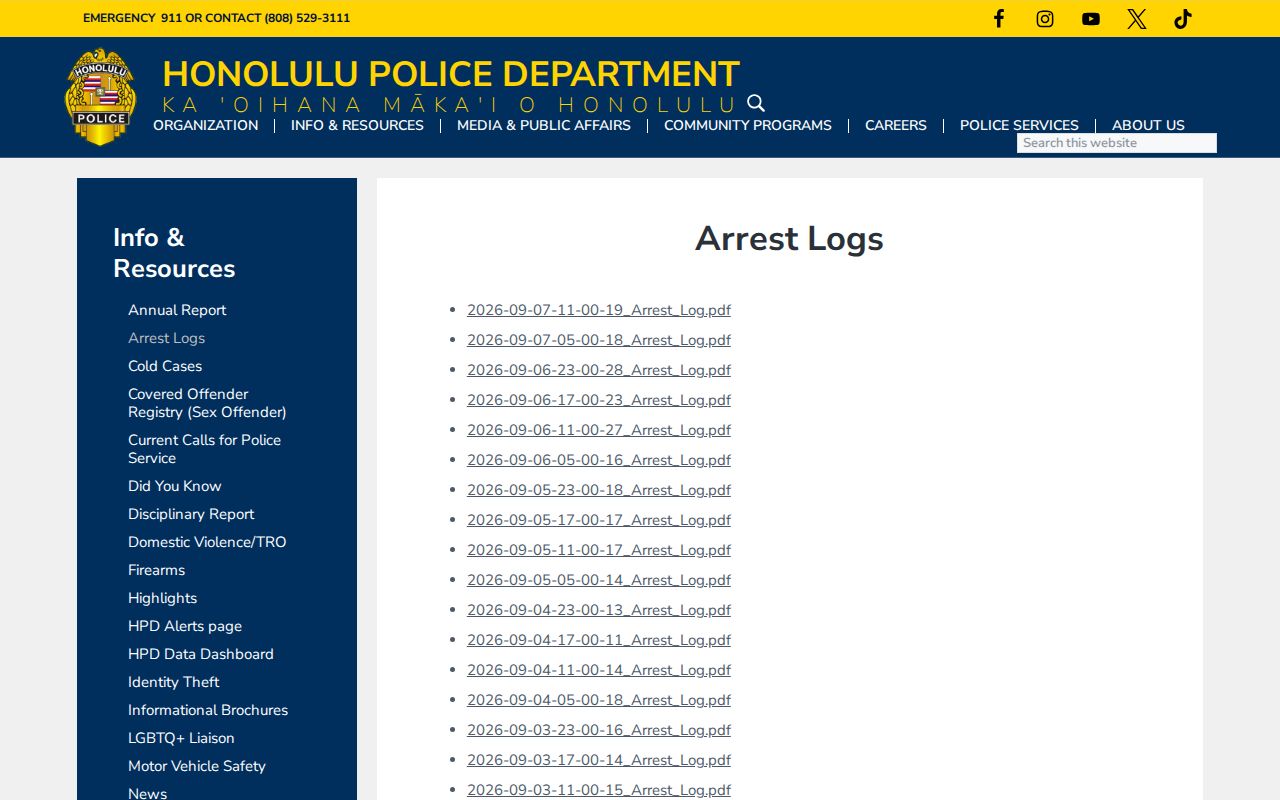
Work backward by timestamp so no segment between two dates is skipped.
Read Honolulu County Arrest Reports
Start with a clear date range. Keep Honolulu's time zone in mind. Observed file names split each day near four six-hour marks, which helps navigation even though HPD promises no fixed schedule. One date can span several multi-page PDFs. Search every opened file rather than trusting a broad web search to index each name.
- Open the HPD landing page and identify every segment in the period.
- Move from newest to oldest and note any gap in the sequence.
- Search each PDF for the surname and compare age, time, officer, offense, and report number.
- Record release or route codes without treating them as a court result.
- Use the report number in a focused HPD request after roll-off.
For the newest daily segments only, use Honolulu County 24 Hour Arrests. The full log suits uncertain dates. It also handles weekends that spread across many files or a status added after the fact.
Honolulu Arrest Log Fields
The public log is narrower than a full HPD arrest report with its linked booking-photo record. HPD names the core fields. Columns can shift between segments. Bond, court date, custody site, booking number, and a photo are not promised in any Honolulu log entry.
| Log field | Meaning and limit |
|---|---|
| Arrest date and time | Event time, not upload or jail admission time. |
| Name and age | Identity clues that should be checked together. |
| Sex and race | Recorded fields, not a sound basis to infer identity. |
| Arresting officer | The linked officer, not a full incident account. |
| Nature of offense | The charge at arrest, which may change in court. |
| Report number | The key reference for an older or fuller HPD record. |
| Release information | A possible later processing update, not the final outcome. |
Codes carry meaning. RBL means bail or bond posted, and ROR means release on own recognizance. TOT signals a transfer, while DCT, CCT, and FCT mark court routes; RNC, RPC, and RPI reflect other release or prosecution states, and PVC points to prosecution by complaint. Juvenile arrests never appear in the adult public log.
Honolulu Arrest Posting Gaps
Weekends and state holidays call for patience. HPD describes daily downloads, yet nothing promises that each visible time block posts on a fixed clock. Manual intake after a computer outage can appear later. Recheck the full range after a new segment appears. No public name-search roster exists countywide. OCCC's page describes the state jail. It lists no current residents. VINELink applies only after state-system entry, not during HPD cellblock processing. Work the sequence: HPD blotter first, then HPD Records and Identification at (808) 723-3258, then the proper custody or court source. The HPD public-access policy page documents both rotation and access.
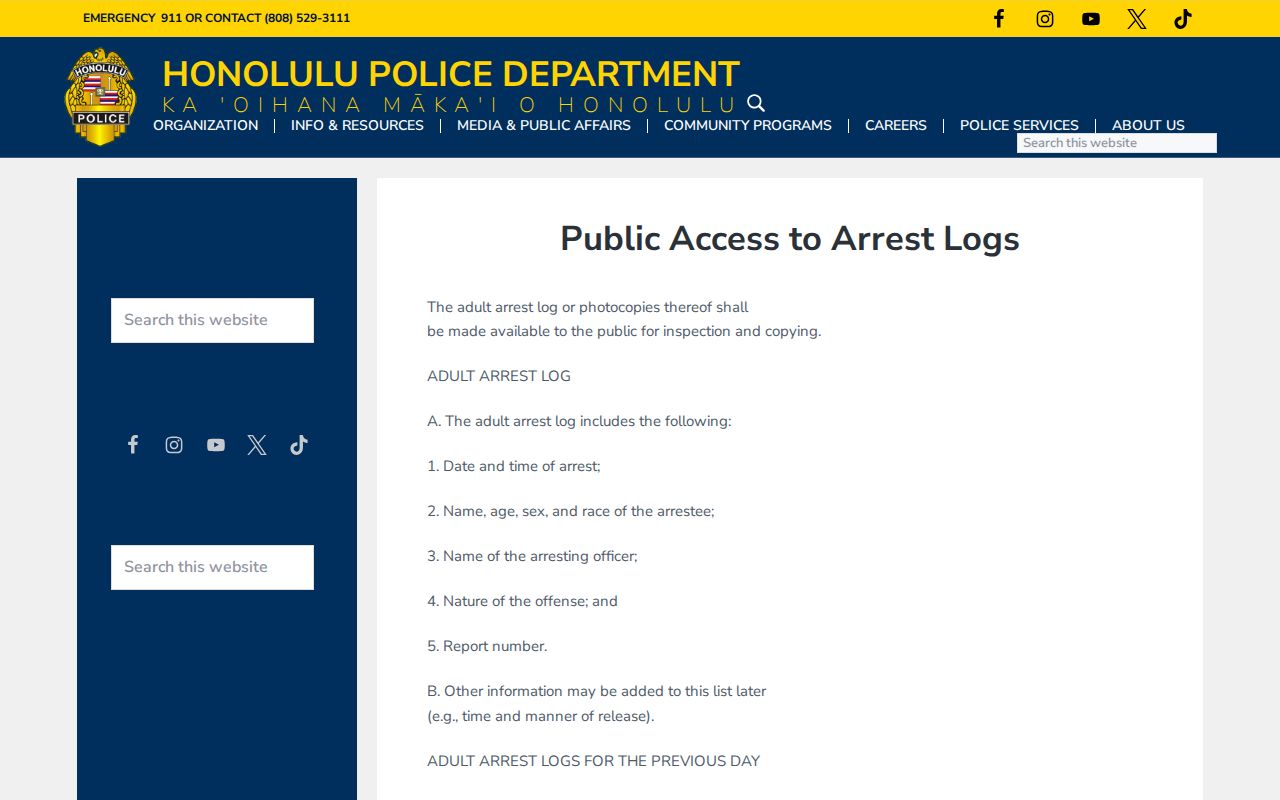
The policy is more reliable than treating a filename as a guaranteed deadline.
Older Honolulu Arrest Records
After 14 days, a log rotates off the website and the Central Receiving display. Roll-off is not deletion. Nor is it sealing. It is not expungement either. HPD keeps the underlying records under approved schedules. The office publishes no single retention term for modern booking photos. For an older log or photo, send a focused request to HPD Records and Identification under Hawaiʻi's Uniform Information Practices Act, including the name, arrest date, report number, district when known, and preferred format.
Ask which retention schedule applies if the item is gone. Expunged records follow a separate correction process. They do not belong in an ordinary public request. Court files and DCR custody records stay with their own custodians. Historical collections may reach the Hawaiʻi State Archives. That archive is not a modern booking search. Its custody never overrides limits on sealed, juvenile, or confidential records. Note: A vanished PDF means the display period closed, and it says nothing about the underlying Honolulu County record.
Honolulu Arrest News Context
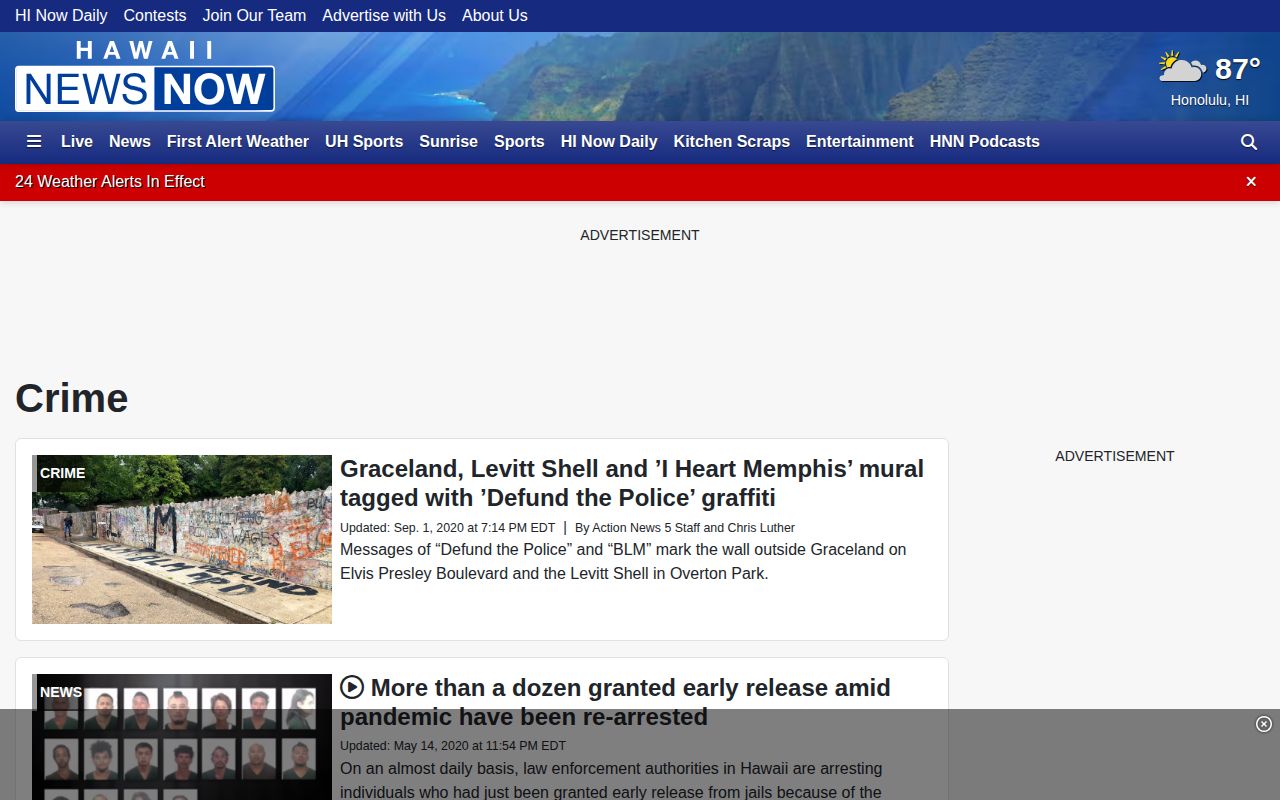
Start with official records, then turn to news for detail. No Honolulu newsroom tracks every arrest, so local coverage fills in only selected cases. Hawaiʻi News Now Crime publishes stories on arrests, investigations, and court proceedings. The Star-Advertiser Crime tag follows breaking cases and sometimes runs HPD-credit booking photos. Civil Beat adds deeper reporting on the justice system and HPD from time to time. Because editors pick which arrests to cover, the Hawaiʻi News Now crime section shows event-driven stories rather than a full roster, and each image should be checked against its caption.
RecentlyBooked runs an unofficial Honolulu section. Treat it with care. Listings there can sit stale or incomplete. The site has even labeled OCCC as HPD-operated, though DCR actually runs the jail, and it cannot replace HPD's PDFs or a direct records request. Lean on it for context only.
Honolulu Arrest Trends Differ
HPD's annual reports answer a different kind of question. The 2024 edition splits adult and juvenile arrest counts by offense category. Those totals cover a closed year, not named people. So keep them apart from any date search. A live blotter, by contrast, shows which adult arrests HPD published within a short window. For the wider picture of police, custody, court, and booking photo channels, the Honolulu County recent arrests hub maps them out.
Honolulu Arrest Custody Stages
A short stay in custody can end before the log does. Someone walks free after posting bond, on their own recognizance, or when charges are declined. Another person transfers to OCCC or moves into court. The old HPD entry still stands as an arrest record, though it no longer shows where that person is held.
- Arrest event
- The HPD action recorded in a dated PDF.
- Police processing
- Review, identity work, and cellblock handling before release or transfer.
- State custody
- DCR custody after entry into a participating system.
- Disposition
- The court outcome, which can differ from the first charge.
Match each source to its stage. The old PDF shows what HPD published. Use a focused request for the police file, VINELink for participating state custody, and Judiciary access for a filed case; none of these routes bypasses sealed, expunged, or juvenile limits.
Honolulu Arrest Photos Stay Separate
The public HPD PDFs are not a mugshot archive. Honolulu police tie an adult identification photo to the arrest report inside their own system. A separate photo-release policy controls who sees it. The log can rotate out while its report or image stays on a longer agency schedule, and the department posts no single photo-retention term.
For an older case, start with the report number and the custodian, not a private image index. HPD applies redactions and legal limits. An expunged matter goes through the official correction path. A booking photo only shows who was processed.
News images and private copies carry the same caution. A photo can sit online long after the HPD PDF rolls away. Its caption may hold only the earliest charge filed. So check the arrest date, the report number, and the later court record before you conclude anything. If a source never shows when it last updated an entry, treat it as secondhand and possibly stale.
While the log is still in HPD's rotation, save the official PDF name and segment time. Those details separate the public display from the agency's underlying file. Once the link disappears, a precise request gives Records and Identification far more to work with than a name-only inquiry.